The Wisest Path: The Four Pillars of Holistic Human Flourishing
Every civilization has wrestled with the question of what it means to live well. Aristotle called it eudaimonia — not mere happiness, but a life in which one’s capacities are fully expressed in harmony with reason and virtue. The Stoics spoke of the good life as inner freedom in the face of fate’s indifference. Today, systems theorists describe human beings as complex, adaptive networks whose wellbeing cannot be reduced to any single variable: not income, not mood, not fitness metrics. We are not discrete parts assembled like a machine; we are living systems woven into larger living systems.
The language of “holistic” flourishing is often flattened into cliché, yet the underlying intuition is sound. A life cannot be whole if its foundations are fractured. Financial stability without psychological depth is a gilded cage. Spiritual serenity that ignores the body’s limitations is a fragile fantasy. Robust social ties without material security can collapse under strain. To walk what we might call the Wisest Path is to recognize that flourishing emerges from the dynamic interplay of multiple domains of life, each shaping and being shaped by the others.
In this essay, we will explore four such domains, or pillars: The Material Energy (financial health), The Inner Altar (mental health), The Collective Web (social health), and The Physical Vessel (physical health). These are not boxes to be ticked but dimensions of a single architecture. Drawing on ancient philosophy, modern psychology, neuroscience, and social science, we will examine how these pillars form an interdependent system and what it means to tend them with wisdom rather than obsession.

The Architecture of a Whole Life
The temptation in self-development culture is to treat life as a series of separate projects: fix your finances, then optimize your productivity, then “hack” your relationships, then finally get around to your health. This sequential model is tidy, but reality is not. Human beings are closer to ecosystems than to assembly lines. As systems theory reminds us, outcomes arise less from isolated components than from the patterns of relationship between them.
The four pillars are best understood as such a pattern. Financial health shapes the conditions under which the mind must make meaning; chronic money stress colors the stories we tell ourselves about safety, worth, and possibility. Mental health, in turn, determines how we interpret our social world, which relationships we nurture or avoid, and whether we perceive community as refuge or threat. Our social fabric influences our access to resources, our habits, and even our physiology — loneliness and belonging leave signatures in our nervous systems. And the state of our bodies mediates everything: from hormonal cascades that influence mood to energy levels that determine how we show up at work, in love, and in civic life.
A disruption in any pillar ripples through the entire system. Financial precarity erodes sleep; poor sleep heightens emotional reactivity; heightened reactivity strains relationships; strained relationships remove buffers against stress, which worsens both mental and physical health. Conversely, incremental improvements can cascade positively. Attending gently to one pillar with wisdom can begin to stabilize the others. The task, then, is not to perfect each domain in isolation but to cultivate balance within the whole architecture.
Flourishing is less a destination we arrive at than a dynamic equilibrium we continually renegotiate with reality.
Pillar I — The Material Energy (Financial Health)
Money is one of the most emotionally charged forms of energy in modern life. It is abstract yet concrete, symbolic yet brutally practical. Behavioral economists Daniel Kahneman and Amos Tversky, through prospect theory, showed how our decisions about gains and losses are systematically biased: we fear loss more intensely than we value equivalent gain. This asymmetry is not just a quirk of mind; it reflects the existential weight that material security carries. To lose is to flirt with exposure to a hostile world.
Maslow’s hierarchy of needs is often depicted as a pyramid, with physiological and safety needs forming the base. Financial health is not explicitly named, yet it implicitly underwrites both: the ability to secure shelter, food, medical care, and a buffer against catastrophe. The American Psychological Association has repeatedly found that financial stress is one of the top reported sources of chronic stress, strongly correlated with anxiety, depression, and relational conflict. Neuroscientific research suggests that persistent financial strain can elevate cortisol, impairing immune function and sleep, while also disrupting prefrontal cortex functioning — the very brain region responsible for planning, impulse control, and long-term decision-making.
In other words, the less secure you feel, the harder it becomes to think clearly about the very decisions that might improve your situation. This is the cruel feedback loop of scarcity. It also exposes why purely moralizing narratives about personal responsibility fail; they ignore the cognitive and biological load imposed by chronic financial stress.
Ancient thinkers saw similar dynamics in a different register. Seneca, in his letters, distinguished between wealth as accumulation and wealth as security. The former is an endless chase; the latter is a form of sufficiency that allows the soul to focus on higher aims. “It is not the man who has too little, but the man who craves more, that is poor,” he writes. From the standpoint of the Wisest Path, material energy is not about conspicuous abundance but about optionality: the freedom to say no to degrading forms of work, the capacity to withstand shocks without collapse, the breathing room to invest in learning, creativity, and community.
It is not the man who has too little, but the man who craves more, that is poor.
Seneca, Letters to Lucilius
To cultivate this pillar is to ask less, “How can I maximize my net worth?” and more, “What material structures support the kind of life I deem worthy?” It is a philosophical as much as a financial inquiry. Eudaimonic finance, we might say, is money in the service of meaning.

Pillar II — The Inner Altar (Mental Health)
If money is the visible circuitry of modern life, the mind is the invisible altar upon which experience is interpreted and offered back to the world. Everything that happens in the other pillars — a bank statement, an argument, a diagnosis, a moment of joy — must pass through the Inner Altar of consciousness. Here it is filtered, reframed, magnified, or softened. Mental health is not simply the absence of disorder; it is the cultivated capacity to meet reality with clarity, resilience, and depth.
Viktor Frankl, a psychiatrist and Holocaust survivor, built his therapeutic approach, logotherapy, on the claim that our primary drive is not pleasure (as Freud suggested) or power (as Adler argued) but meaning. Even in a concentration camp, stripped of all external freedoms, Frankl observed that the interpretive stance one takes toward suffering can preserve an inner freedom. This is not a romanticization of trauma, but an acknowledgment that the mind is not merely a passive victim of circumstance. Our Inner Altar is where we ask, sometimes inarticulately: “What does this mean? What is required of me now?”
Confine yourself to the present.
Marcus Aurelius, Meditations, Book VIII
Contemporary neuroscience provides a complementary angle. Marcus Raichle and colleagues identified the brain’s default mode network (DMN), active when our minds wander, engage in self-referential thinking, or ruminate about the past and future. An overactive, dysregulated DMN is associated with depression and anxiety, where the narrative “I” becomes trapped in loops of fear, shame, or despair. Practices like mindfulness meditation, popularized and studied through Jon Kabat-Zinn’s Mindfulness-Based Stress Reduction (MBSR) program, appear to alter the activity and connectivity of this network, reducing rumination and increasing the sense of spacious awareness around thoughts.
Mental health, then, is partly a question of how we relate to our own minds. Do we assume that every thought is an accurate report, or can we recognize thoughts as mental events arising and passing within a wider field of awareness? Kabat-Zinn describes mindfulness as “paying attention, in a particular way: on purpose, in the present moment, and nonjudgmentally.” Such attention turns the Inner Altar from a battleground of competing narratives into a place of honest, compassionate seeing.
Carl Jung’s idea of individuation adds yet another layer: mental health involves integrating the disowned parts of the self — the shadow, the forgotten talents, the inconvenient desires — into a more coherent whole. To flourish is not to exile our complexity but to reconcile with it. On the Wisest Path, tending the Inner Altar means making room for grief and joy, strength and vulnerability, ambition and humility, without collapsing into fragmentation or denial.

The Inner Altar is where reality becomes story. To care for it is to choose, again and again, the most truthful and life-giving story we can honestly tell.
Pillar III — The Collective Web (Societal Health)
Modern culture often imagines the self as an autonomous unit pursuing private goals with minimal reference to the wider whole. Yet anthropologically, psychologically, and biologically, this is a distortion. Humans are irreducibly relational. Our nervous systems co-regulate with others; our identities are shaped by the stories of our communities; our opportunities are bound up with the structures of our societies. To speak of holistic flourishing without addressing the Collective Web is to individualize what is inescapably shared.
What injures the hive injures the bee.
Marcus Aurelius, Meditations, Book VI
Robert Putnam’s landmark work Bowling Alone chronicled the decline of social capital in late twentieth-century America: fewer civic associations, less neighborhood trust, more isolation. The consequences, he argued, extend beyond nostalgia for community picnics; they infiltrate everything from crime rates to educational outcomes and health. The long-running Harvard Study of Adult Development, which has followed participants for over eight decades, arrives at a similar conclusion from a different angle: the quality of our relationships is the single strongest predictor of life satisfaction and longevity. Warm, reliable connections buffer us against stress, while loneliness predicts earlier mortality as strongly as well-known risk factors like smoking.
Sociologist Émile Durkheim, writing at the dawn of industrial modernity, introduced the concept of anomie: a state of normlessness and disconnection in which individuals feel unmoored from a coherent social fabric. Anomie, he argued, was not simply a private malaise but a structural condition that could lead to higher rates of suicide and other pathologies. When the Collective Web frays, individuals suffer in ways that cannot be fixed by therapy or self-help alone.
Ubuntu philosophy, emerging from Southern African traditions, offers a corrective to hyper-individualism with its concise affirmation: “I am because we are.” Identity, in this view, is not a solitary possession but a relational achievement. One’s humanity is realized through participation in the humanity of others. On the Wisest Path, this implies that personal flourishing and social justice are not parallel projects but intertwined obligations. To care about the Collective Web is to ask: What kind of world makes it possible for people — not just me — to live with dignity, security, and opportunity?

No individual can be well in a world that is structurally unwell. The good life is never a purely private achievement.
Pillar IV — The Physical Vessel (Physical Health)
For much of Western intellectual history, the body has been treated as a vehicle for the “real” self — assumed to be the mind or soul. Yet contemporary science and ancient wisdom converge on a different picture: the body is not an accessory to consciousness but a co-author of it. To neglect the Physical Vessel is to misunderstand what we are.
No man is free who is not master of himself.
Epictetus, Discourses
Research on the gut-brain axis, summarized in the work of gastroenterologist Emeran Mayer, reveals that the enteric nervous system and our microbial inhabitants communicate bidirectionally with the central nervous system. Changes in gut composition can influence mood, cognition, and even risk for certain psychiatric conditions. The body literally “speaks” to the brain in chemical and electrical languages, shaping how we feel and think.
Peter Attia’s longevity framework emphasizes that among all interventions studied, exercise stands out as the most potent and reliable “drug” for extending both lifespan and healthspan. Regular physical activity improves cardiovascular health, supports metabolic function, preserves muscle mass, and exerts powerful antidepressant effects. Meanwhile, sleep, often sacrificed in the cult of productivity, plays a vital role in memory consolidation, emotional regulation, and cellular repair. Physical health is not a vanity metric; it is the substrate on which our mental clarity and emotional stability rest.
Trauma studies deepen the picture. In The Body Keeps the Score, psychiatrist Bessel van der Kolk documents how unresolved trauma lodges itself in somatic patterns: hypervigilance, numbness, chronic pain, dissociation. Talk therapy alone often fails to reach these embodied imprints; movement, breathwork, and other body-based modalities become essential in reconciling the nervous system to safety. Hippocrates’ ancient maxim, “Let food be thy medicine,” may sound quaint, but it hints at a larger truth: the body is both archive and instrument, storing the history of our experiences and equipping us for future ones.
To honor the Physical Vessel on the Wisest Path is not to wage war on our imperfections, nor to idolize youth, but to adopt a posture of stewardship. We care for the body not because it must conform to an aesthetic ideal, but because it is the only site in the universe from which we can love, learn, create, and act.

The body is not the prison of the mind but its oldest ally, carrying our intentions into the world one breath and one step at a time.
The Interconnection: Where the Pillars Speak to Each Other
If each pillar were merely a category, we could treat them as separate chapters in a self-improvement manual. But in lived experience, they converse constantly, sometimes in whispers, sometimes in shouts. This interconnection is where the real intellectual and practical challenge lies: how do changes in one domain cascade through the others?
Consider a familiar spiral. A person experiences sudden income loss. Material Energy destabilizes. Anxiety about bills and housing mounts, triggering repeated activation of the stress response. Cortisol rises, sleep quality falls, irritability increases. The Physical Vessel begins to fray: immune resilience drops, tension accumulates in muscles, fatigue sets in. In this depleted state, the Inner Altar becomes more vulnerable to catastrophic thinking. The default mode network seizes on worst-case scenarios, replaying them at 3 a.m. What might have been interpreted, in a more resourced state, as a difficult but navigable challenge now appears as an inescapable doom.
This inner turmoil alters social behavior. Shame and fear may lead to social withdrawal, ghosting friends, avoiding community gatherings, or snapping at loved ones. The Collective Web weakens just when its support is most needed. As connections fray, practical help and emotional buffering disappear, confirming the person’s sense of isolation. The original financial shock has now propagated through body, mind, and society. What began as a spreadsheet problem becomes an existential crisis.
Now invert the direction. Imagine someone begins with a small, sustainable commitment to the Physical Vessel: a daily twenty-minute walk in the morning light. Over weeks, this modest ritual improves sleep and mood, gently recalibrating the nervous system. Cognitive function sharpens; the Inner Altar has a bit more spaciousness. With slightly clearer thinking, the person revisits their finances not in a panic, but with curiosity, perhaps finally opening the unopened bills or setting up a simple budgeting system. Material Energy, once avoided, becomes a domain of incremental agency.
As stress decreases and confidence grows, social behavior shifts. The person feels more willing to reach out, to say yes to a small gathering, to ask for mentorship at work, or to join a community class. The Collective Web thickens. These relationships may, in turn, open doors to new opportunities, resources, or perspectives that further stabilize the financial and psychological terrain. The spiral turns upward. The same systemic logic that amplifies suffering can also amplify flourishing.
We can trace similar loops in other configurations. Mental health interventions — therapy, meditation, medication when appropriate — can transform the Inner Altar’s capacity to relate to money, making it possible to break cycles of avoidance or compulsive spending. Social movements that improve working conditions and social safety nets strengthen the Collective Web, which directly influences Material Energy and indirectly supports both mental and physical health. Public health initiatives that encourage active transportation reshape the Physical Vessel of entire populations and, over time, their collective mood and productivity.
The key insight is that no pillar is sovereign. Attempts to pursue financial optimization at the expense of sleep, relationships, or integrity will eventually backfire. Pursuing spiritual or psychological growth while neglecting structural injustice risks becoming a form of refined selfishness. Caring only for the body without attending to meaning or community tends to curdle into emptiness. The Wisest Path asks us to become systems thinkers of our own lives: to notice feedback loops, lag times, and trade-offs, and to design our days in light of the whole.
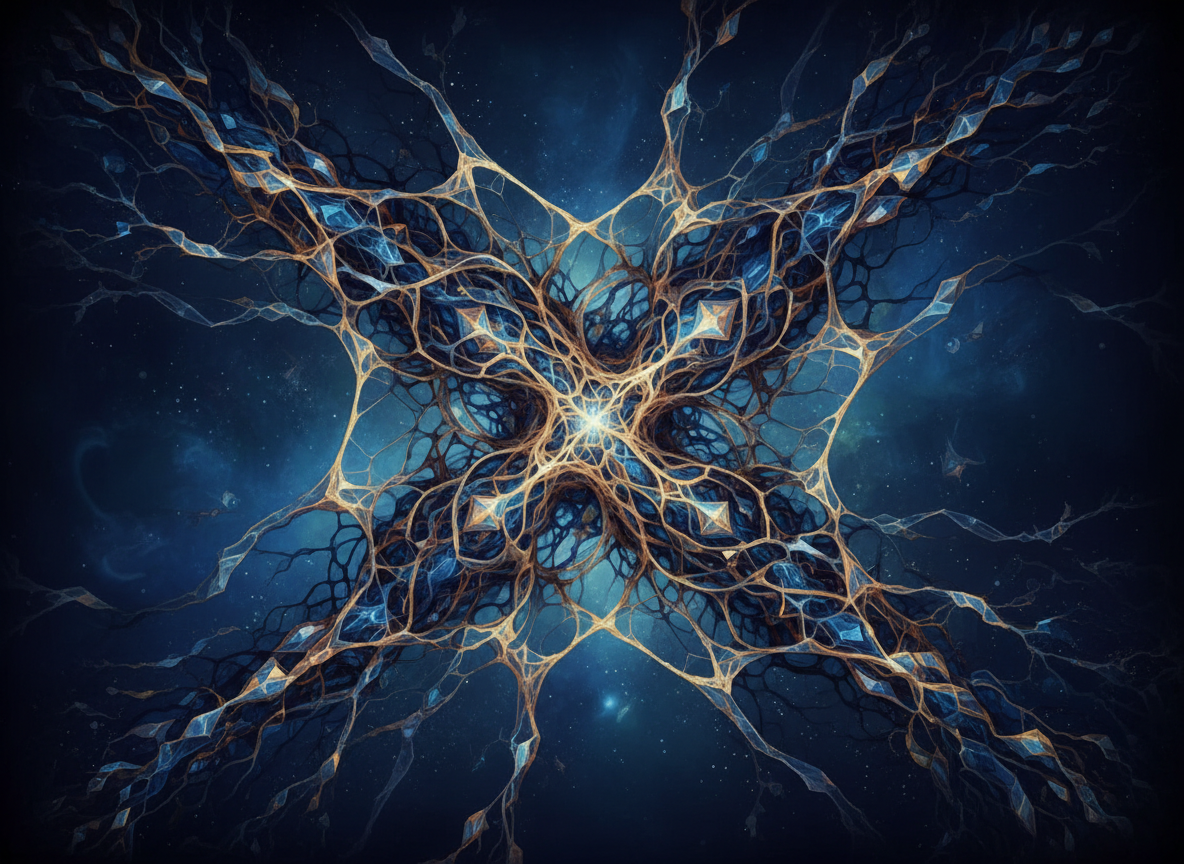
When we act on one pillar, we are never acting on it alone. Every choice is a message sent across the web of our being, and the echoes return from directions we do not always anticipate.
Walking the Wisest Path
Aristotle argued that the virtue most essential to a good life is phronesis, often translated as practical wisdom. Unlike technical know-how or theoretical knowledge, phronesis is the cultivated ability to discern, in concrete situations, what the right thing is to do and how to do it. It is sensitive to context, to timing, to proportion. In the landscape of the four pillars, phronesis is the art of tending to the whole.
Practical wisdom does not demand perfection in any domain. It asks for honest appraisal. Where is Material Energy constricted, and what is within my control to adjust? How is the Inner Altar coloring my perception of challenges and opportunities? In what ways am I sustained or constrained by the Collective Web I inhabit? What signals is my Physical Vessel sending that I have been ignoring? These are not questions to be answered once and filed away, but living inquiries that evolve as circumstances change.
To walk the Wisest Path is to abandon both fatalism and fantasy. It rejects the idea that we are merely products of our genes, our upbringing, or the market, but it also rejects the illusion that willpower alone can bend every pillar to our will. Instead, it invites a sober, compassionate engagement with reality: to see clearly where we are entangled, where we have leverage, and where we need help.
This path is not a checklist of habits but a practice of attention. It may begin with small, even hidden acts: setting aside an hour to face your bank accounts without self-condemnation; scheduling a first therapy session; sending a message to revive a neglected friendship; going to bed half an hour earlier; cooking a simple, nourishing meal; taking a slow walk without headphones to feel your own breath. Each act whispers a quiet but profound affirmation: my life is an integrated whole, and I am willing to care for it as such.
At the end of any given day, none of us will have balanced the pillars perfectly. We will have overemphasized one, neglected another, misunderstood a third. Yet wisdom grows not from flawless execution but from repeated, humble returns to the question: What is the most honest, life-giving adjustment I can make now, in light of the whole of my life?
This is your invitation, not to judge yourself by any external standard, but to engage in rigorous self-inquiry across all four domains. Where is there unnecessary suffering that could be eased with support or a different perspective? Where is there latent strength waiting for a modest investment of attention? Where might your own flourishing contribute, even in small ways, to the flourishing of others within the Collective Web?

The Wisest Path is not a highway with fixed signage. It is more like a trail you help to carve with each thoughtful choice, each courageous conversation, each act of stewardship toward your resources, your mind, your community, and your body. The four pillars are already there, bearing the weight of your days. The question that remains is how you will meet them, and what kind of life you will build upon their interwoven strength.
About the Author
R. Lee Farrow
R. Lee Farrow is the author of the V.O. Family Book Series, an Army Veteran, and a dedicated patron of her community. |
Editor: F. Farrow-Matthews


Leave a comment